- Call Us: +90 (532) 266 27 16
- Opening Hours: Sunday - Friday, 09:00 - 21:00

Eyelash Extension Aftercare, Cleaning and Refill Guide
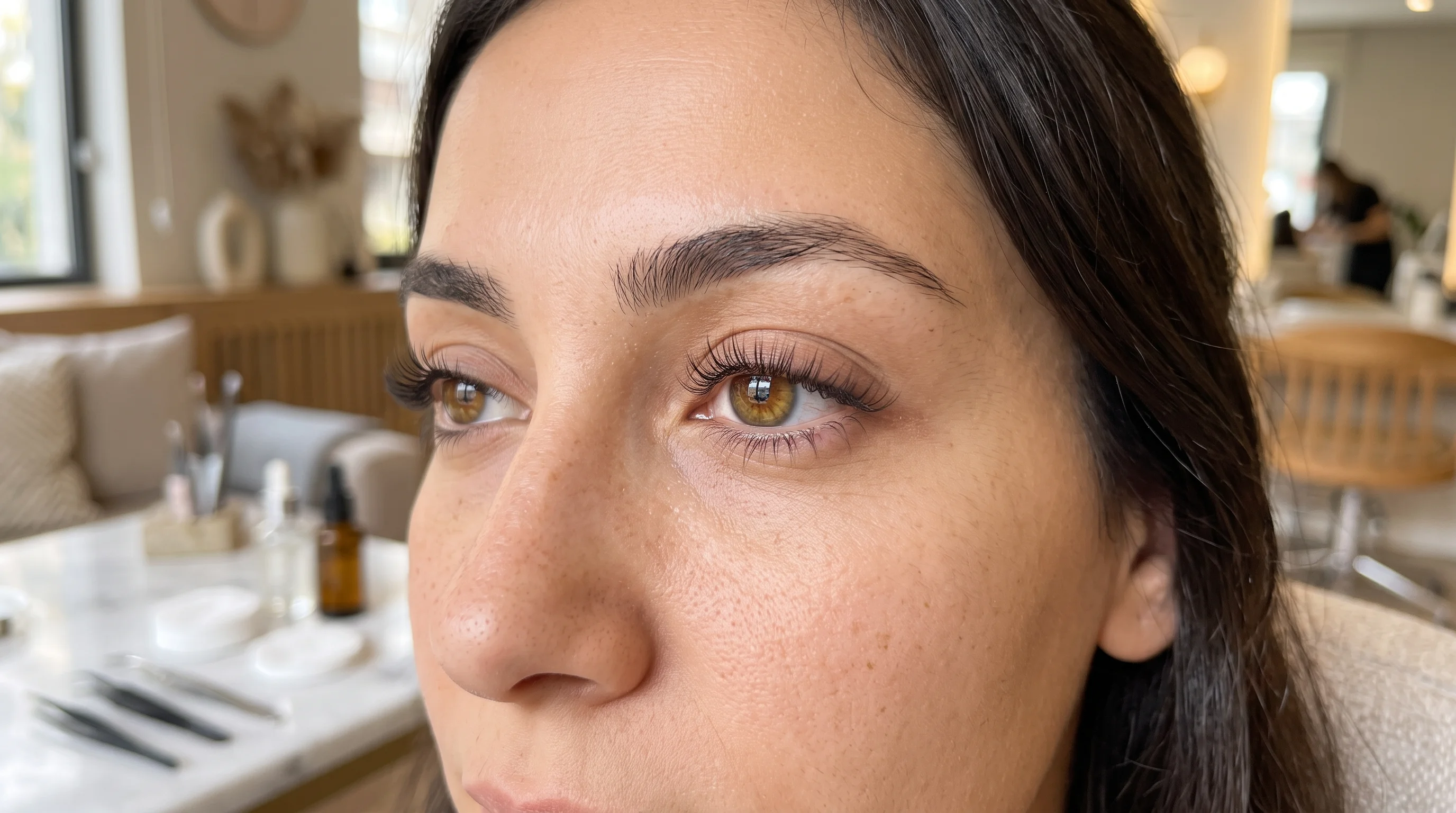
Eyelash extension aftercare is mainly about keeping the lash line clean, avoiding unnecessary pulling and booking a refill when the extensions begin to lose their balance.
Extensions should not simply be kept completely dry or left unwashed. Oils, makeup residue and daily build-up can collect around the lash line, so gentle and regular cleaning is an important part of maintenance.
The goal is not to make every extension stay attached for as long as possible. Good aftercare helps the lashes remain clean, comfortable and evenly distributed as the natural lashes continue through their normal growth cycle.
How Should You Care for Eyelash Extensions?
A daily lash routine does not need to be complicated.
Useful habits include:
· cleaning the lashes regularly with a suitable product
· avoiding rubbing the eyes
· not pulling or picking at individual extensions
· brushing gently with a clean lash spoolie
· drying the lashes carefully after cleansing
· keeping heavy oils away from the attachment area
If some lashes cross over or change direction, they should be brushed gently rather than pulled into place with the fingers.
How Do You Clean Eyelash Extensions?

Eyelash extensions should be cleaned carefully around the lash line.
A cleanser suitable for the eye area and eyelash extensions can help remove skin oils, makeup and everyday residue without requiring aggressive rubbing.
After cleansing:
1. Rinse gently if required by the product.
2. Avoid rubbing the lashes with a towel or cotton pad.
3. Remove excess water carefully.
4. Allow the lashes to dry.
5. Brush them gently with a clean spoolie once dry.
Products that leave fibres around the lashes should be used with caution because small fibres can catch between the extensions.
What Should You Avoid After Getting Eyelash Extensions?
The first aftercare period can vary depending on the adhesive and application system used.
For this reason, there is no single waiting time that applies to every set of eyelash extensions. The aftercare instructions given by the lash technician should be followed for the specific adhesive system used.
During the initial period, it may be advisable to avoid:
· rubbing the eyes
· pulling the extensions
· excessive heat or steam
· applying oily products directly around the lash bonds
Once the initial aftercare period is complete, regular cleansing should continue.
Can You Use Oil-Based Products with Eyelash Extensions?
Heavy oil-based products may affect the durability of some eyelash extension adhesives when they are used directly around the attachment points.
This does not mean that all skincare around the eyes must be avoided.
When choosing makeup remover, eye cream or cleansing products, it is useful to check whether they are suitable for use with eyelash extensions and to avoid applying heavy oils directly onto the lash line.
Can You Wear Mascara with Eyelash Extensions?
Many people do not need mascara once eyelash extensions are applied.
If mascara is used, it should be suitable for eyelash extensions and easy to remove without heavy rubbing.
Waterproof or difficult-to-remove mascara can require more friction during cleansing, which may place unnecessary stress on both the extensions and the natural lashes.
Eye makeup should always be removed carefully without pulling at the attachment points.
How Long Do Eyelash Extensions Last?
Eyelash extensions gradually become less full as the natural lashes grow and shed.
Each extension is attached to a natural lash, so when that natural lash reaches the end of its growth cycle and falls out, the attached extension usually falls with it.
Retention can be affected by:
· the natural lash growth cycle
· the initial density of the set
· the adhesive and materials used
· cleansing habits
· frequent eye rubbing
· oily products around the lash line
· heat and steam exposure
· individual aftercare habits
Because of these variables, the same retention period should not be expected for every client.
A refill can be considered once the lash line begins to develop noticeable gaps or loses its overall balance.
What Is an Eyelash Extension Refill?
An eyelash extension refill, also called a lash infill, is used to restore areas where extensions have been lost as part of the natural lash cycle.
During the appointment, the existing set is checked first. Lashes that have grown out significantly, changed direction or no longer have a suitable attachment may need to be adjusted or removed before new extensions are added.
A refill is not always simply a shorter version of a full set.
If too few extensions remain or the existing set has become too uneven, a fresh application may be more appropriate than an infill.
When Should You Book a Lash Refill?
There is no exact refill interval that works for everyone.
The timing depends on factors such as:
· natural lash growth
· daily aftercare
· the application technique
· the density of the original set
· products used around the eyes
A refill may be needed when visible gaps begin to appear, the lashes grow noticeably away from the lash line or the overall shape becomes uneven.
Waiting too long may mean that there are not enough suitable extensions left for a standard refill.
How Can You Keep Eyelash Extensions Looking Neat?
A few habits can help maintain a more even appearance:
· cleanse the lashes regularly
· avoid rubbing the eyes
· do not pull or twist the extensions
· brush gently with a clean spoolie
· avoid heavy mechanical pressure
· use compatible eye-area products
· book a refill before the set becomes excessively sparse
Sleeping face-down or pressing the lashes heavily into the pillow may also affect the direction of some extensions.
Can You Remove Eyelash Extensions at Home?
Eyelash extensions should not be pulled, picked or forcefully removed at home.
Trying to remove the extensions manually may also pull out the natural lashes.
Professional removal uses a remover suitable for the adhesive system so that the extensions can be released in a more controlled way.
If the natural lashes appear noticeably weakened or there is irritation, discomfort or swelling around the eyelids, the set should be checked before further cosmetic treatment.
Eyelash Extension Aftercare and Refills in Istanbul
The appearance of eyelash extensions depends not only on the original application but also on how the lashes are cared for afterwards.
At Luxus Hair Group’s Galata and Karaköy salons, eyelash extension services are planned according to the length, density and strength of the natural lashes.
When a client returns for a refill, the remaining extensions and the condition of the natural lashes can be assessed before deciding whether an infill or a new set is more suitable.
If there is an active eye infection, significant irritation, a stye or ongoing sensitivity around the eyelids, cosmetic lash treatment should be postponed and appropriate medical advice sought when necessary.
Frequently Asked Questions About Eyelash Extension Aftercare
Should eyelash extensions be washed?
Yes. Gentle, regular cleansing helps remove oil, makeup and residue from around the lash line.
How often do eyelash extensions need a refill?
There is no fixed interval for everyone. A refill is usually considered when noticeable gaps appear or the set loses its balance.
Can I use mascara on eyelash extensions?
It may be possible with a product suitable for extensions, but many clients do not need it. Waterproof mascara is generally less practical because it can require more rubbing to remove.
Can I remove eyelash extensions myself?
No. Pulling or picking at the extensions can also damage the natural lashes, so professional removal is recommended.