- Call Us: +90 (532) 266 27 16
- Opening Hours: Sunday - Friday, 09:00 - 21:00

Straight Razor Shave: Hot Towel and Traditional Turkish Barber Experience
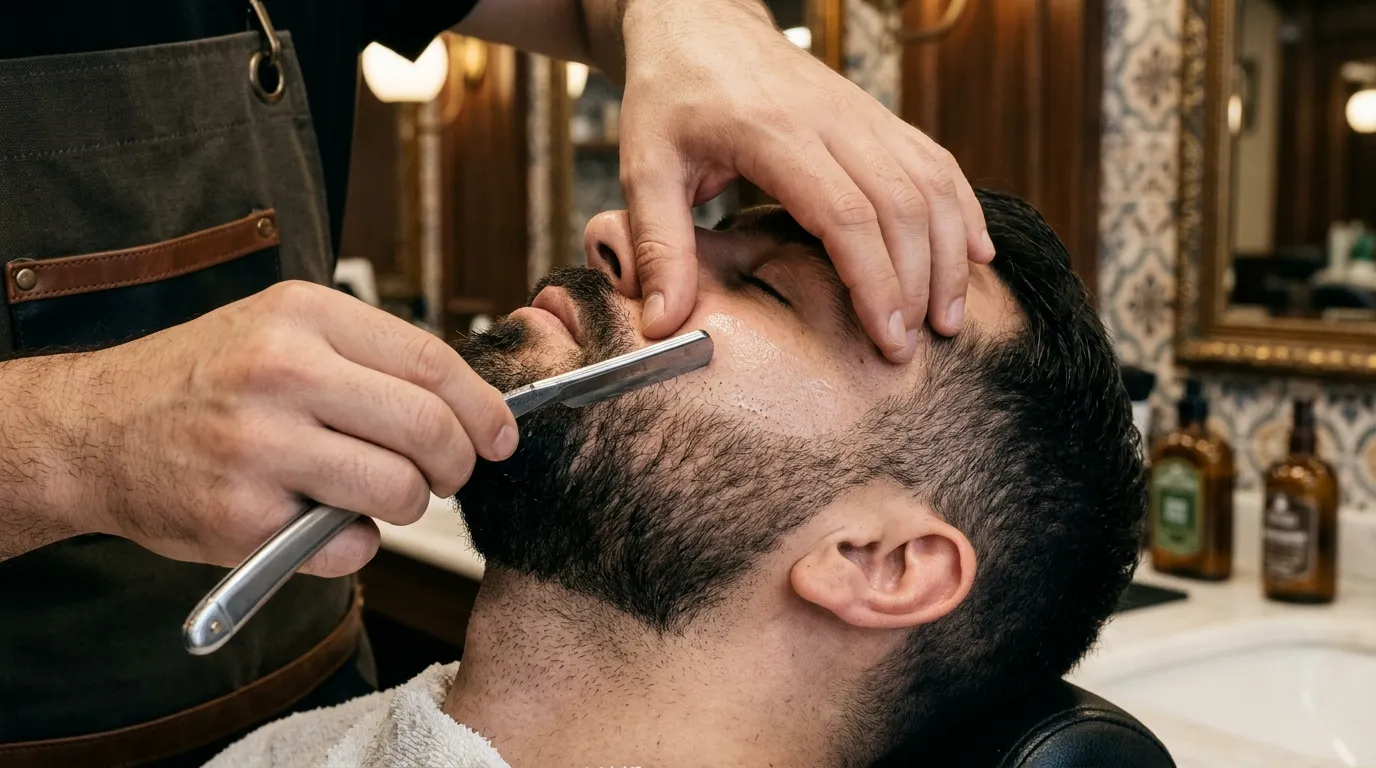
A straight razor shave is a traditional shaving method that uses a sharp blade to cut facial hair close to the skin. In Turkish barber culture, it is often associated with a warm towel, shaving cream or lather, precise razor work and post-shave care.
The purpose is not always to remove every part of the beard. A straight razor can also be used to define cheek and neckline edges, clean up sideburns or create a sharper outline around an existing beard.
However, a close shave is not equally suitable for every skin type. Beard growth direction, skin sensitivity and a history of razor bumps or irritation should be considered before the treatment.
What Is a Straight Razor Shave?
A straight razor shave involves removing facial hair close to the skin with a sharp shaving blade.
Traditional barbers may use a classic folding straight razor or a barber-style razor fitted with a replaceable blade, often called a shavette.
Unlike beard trimmers that leave a selected length of hair, a straight razor can create a very close finish.
It can be used for both clean-shaven looks and detailed beard outlining.
However, a closer shave is not automatically a better shave. For people prone to ingrown hairs, removing the beard too close to the skin may increase irritation.
How Does a Traditional Hot Towel Shave Work?
A traditional hot towel shave generally involves preparing the skin and beard, applying shaving lather, shaving with controlled movements and providing appropriate aftercare.
The exact steps can vary depending on the barber and the service selected.
1. Assessing the Beard and Skin
Before shaving, the barber considers beard length, density, growth direction and skin sensitivity.
Facial hair does not necessarily grow in the same direction across the entire face. The neck area, in particular, may contain different growth patterns.
Clients who frequently experience razor bumps, cuts or redness should mention this before the shave.
2. Preparing the Beard With a Hot Towel
A warm, damp towel helps hydrate and soften facial hair before shaving.
Moisture and warmth can make coarse beard hairs easier to cut.
The towel should feel comfortably warm rather than excessively hot. Overheated towels may cause irritation or burns, particularly on sensitive skin.
3. Applying Shaving Cream or Lather
Shaving cream, soap or lather is applied to help the blade move smoothly across the skin.
A suitable shaving product can reduce friction and make the process more comfortable.
Product choice is important for sensitive skin. Strongly fragranced or irritating ingredients may not be appropriate for everyone.
4. Shaving With the Razor
The barber considers the direction of beard growth and uses controlled razor movements.
Short strokes, appropriate blade pressure and shaving with the direction of hair growth may help reduce irritation.
Repeatedly shaving the same area or pressing too firmly can increase the likelihood of redness, small cuts and ingrown hairs.
5. Post-Shave Care
After shaving, remaining products are removed and the skin may be treated with suitable aftercare products.
Depending on skin sensitivity, this can include a cool, damp towel, a soothing product or a moisturiser.
Post-shave products should be selected according to the condition of the skin.
What Does a Hot Towel Do Before Shaving?
The hot towel is one of the most recognisable elements of a traditional Turkish barber shave.
Its main purpose is to soften facial hair through warmth and moisture, preparing the beard for the razor.
For people with coarse facial hair, this preparation can make shaving more comfortable.
There is also a common misconception worth correcting:
A hot towel does not physically open or close pores.
Pores do not function like doors that open with heat and close with cold water.
The practical benefit comes primarily from hydrating and softening the beard.
A warm towel can also make the traditional shaving experience more relaxing, provided the temperature is appropriate for the skin.
Straight Razor Shave vs Electric Shaver: What's the Difference?
Straight razors and electric shavers serve different purposes and can produce different results.
A straight razor may provide a closer finish, but this does not mean it is the best option for every skin type.
People who regularly experience ingrown hairs may find a method that leaves slightly more length more comfortable.
Straight Razor vs Disposable Razor: Are They the Same?
The terms straight razor and razor blade are sometimes used interchangeably, but the tools are not identical.
A traditional straight razor has a long blade that folds into its handle.
Many modern barbers use a shavette, which resembles a traditional straight razor but holds a replaceable blade.
Disposable and cartridge razors generally have a different design and blade arrangement.
All of these tools cut facial hair with sharp blades, but technique, blade exposure and handling vary.
The quality of the shave depends on more than the tool itself. Blade condition, hygiene, beard preparation and shaving technique are all important.
In professional barbering, reusable equipment must be appropriately cleaned and disinfected, while single-use blades must not be reused between clients.
Is a Straight Razor Shave Suitable for Sensitive Skin?
Some people with sensitive skin may tolerate a professionally performed straight razor shave, but it is not suitable for everyone.
Particular caution is needed if you have:
Frequent redness after shaving
A history of ingrown hairs or razor bumps
Active acne or inflamed skin lesions
Open cuts or significant irritation
Sensitivity to shaving products
Can Straight Razor Shaving Cause Ingrown Hairs?
Yes. Very close shaving can increase the risk of ingrown hairs, particularly in people with curly or tightly coiled facial hair.
Shaving against the direction of growth, applying excessive pressure and repeatedly passing over the same area may contribute to the problem.
For people prone to razor bumps, leaving a small amount of facial hair rather than shaving to skin level may be preferable.
Persistent, painful or inflamed ingrown hairs should be assessed by a dermatologist.
Does Straight Razor Shaving Make Your Beard Grow Thicker?
No. Shaving with a straight razor does not increase the number of hair follicles or make facial hair grow faster or thicker.
Shaving cuts the visible portion of the hair without changing the biological structure of the follicle.
As shaved hair grows back, its blunt tip may feel coarser than an uncut hair.
This can create the impression of thicker growth, but it does not mean the beard has become denser.
Beard growth and density are influenced primarily by genetics and hormonal factors.
How Should You Care for Your Skin After a Straight Razor Shave?
Skin may feel temporarily sensitive after a close shave.
Gentle aftercare can help reduce additional irritation.
Avoid rubbing the face aggressively.
Apply a suitable, gentle moisturiser.
Avoid strongly alcohol-based products if the skin feels irritated.
Postpone harsh exfoliation or potentially irritating skincare treatments.
Allow irritated skin to recover before shaving the same area again.
If you develop increasing pain, spreading redness, signs of infection or cuts that do not heal normally, seek appropriate medical advice.
The Traditional Turkish Barber Shaving Experience
In Turkish barber culture, a straight razor shave is more than simply removing facial hair.
Hot towel preparation, shaving lather, precise razor technique and post-shave care combine to create a distinctive grooming experience.
This traditional approach can also be adapted to modern preferences and individual skin needs.
For example, someone requesting a completely clean shave may need a different service from a client who wants to keep their beard while cleaning up the cheek and neckline edges.
At Luxus Hair Group, the Traditional Turkish Barber Service brings together traditional barbering techniques and contemporary grooming.
The exact shaving method, hot towel preparation and additional care steps should be confirmed as part of the selected service.
Can a Straight Razor Be Used to Shape Beard Lines?
Yes. A straight razor is not limited to clean-shaven styles.
It can be used to define the cheeks, neckline and sideburn edges while leaving the rest of the beard intact.
For shorter beards, precise outlines can create a more structured appearance.
For longer or more natural beard styles, excessively sharp lines may not always suit the intended look.
For guidance on where these lines should sit, read our Beard Neckline and Cheek Line Guide.
Straight Razor Shaving in Istanbul: Galata and Karaköy
When looking for a traditional barber shave in Istanbul, it is worth considering more than the atmosphere of the salon.
Hygiene standards, the barber's technique, your skin's sensitivity and the exact service included all matter.
Luxus Hair Group offers traditional barbering and beard grooming services at its Galata and Karaköy salons.
LUXUS Galata
Müeyyetzade, Galip Dede Cd. No: 97B
34425 Beyoğlu, Istanbul
LUXUS Karaköy
Arap Cami, Tersane Cd. No: 2
34421 Beyoğlu, Istanbul
When booking, explain whether you want a complete clean shave, beard shaping or only precise line detailing.
You should also confirm whether hot towel preparation, specific skincare products or additional grooming steps are included in the appointment.
Frequently Asked Questions About Straight Razor Shaving
What is a straight razor shave?
A straight razor shave is a traditional method of cutting facial hair close to the skin using a sharp blade. It can be used for a clean shave or detailed beard outlining.
Why do barbers use a hot towel before shaving?
A warm, damp towel helps soften facial hair and prepare it for shaving. It does not physically open the pores.
Is a straight razor better than an electric shaver?
It depends on the desired result and skin sensitivity. A straight razor can produce a closer finish, while an electric trimmer may be preferable when some beard length needs to remain.
Does straight razor shaving make facial hair thicker?
No. Shaving does not change hair follicle density, hair thickness or growth rate. Newly cut hairs may simply feel coarser as they grow back.
Can a straight razor shave irritate sensitive skin?
Yes. Very close shaving, excessive pressure or shaving against hair growth can increase irritation, especially for people prone to razor bumps.
Is a hot towel included in a traditional barber service?
It depends on the selected service. Hot towel preparation is a traditional part of many barber shaves, but it should not be assumed to be included in every appointment.